The Power of Poetry in Building Cultural Bridges
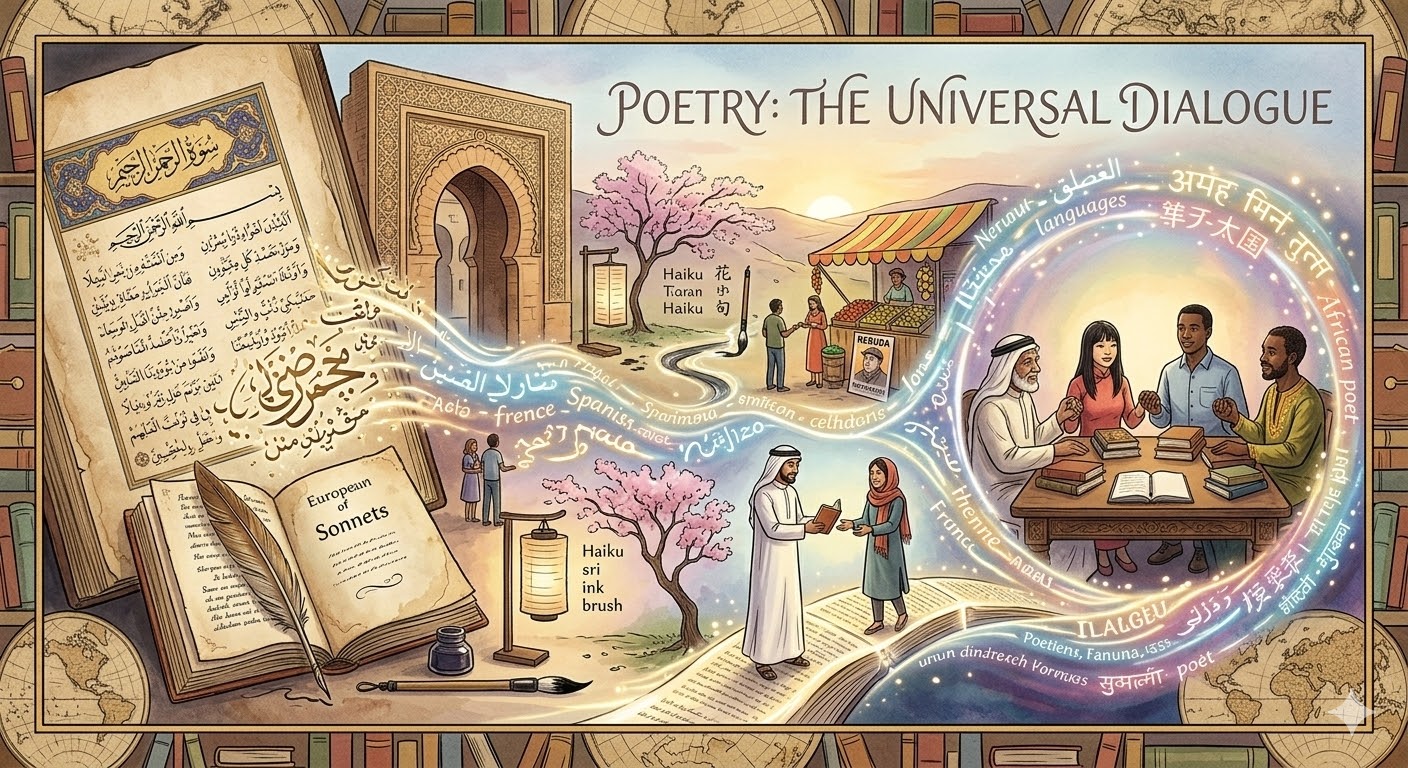
Throughout history, poetry has traveled across borders more easily than armies or politics. A poem can cross languages, religions, and cultures, touching readers who may have nothing else in common.
One of the most remarkable aspects of poetry is its ability to translate human experience. Love, longing, loss, and hope are universal emotions. When a poet writes honestly about these feelings, readers from different cultures can recognize themselves in the words.
Arabic poetry, for example, has influenced global literature for centuries. Classical poets developed sophisticated meters and rhetorical techniques that still inspire writers today. Modern Arabic poetry has continued this tradition while exploring contemporary themes such as identity, exile, and social change.
At the same time, poetry from other cultures has enriched Arabic literature as well. Translations of European, Latin American, and Asian poets have opened new doors for writers and readers in the Arab world.
This exchange of ideas shows that poetry is not only a form of art but also a form of dialogue.
When readers encounter poetry from another culture, they gain more than aesthetic pleasure. They gain insight into how others see the world. This understanding helps reduce stereotypes and encourages empathy.
Organizations like Alumniyat aim to strengthen these cultural connections by creating spaces where poets and readers from different backgrounds can meet, share, and discuss literature.
In a divided world, poetry reminds us that our stories are often more similar than we think.
A poem may begin with one voice, but its echo belongs to everyone who hears it.