Why Poetry Still Matters in the Age of Artificial Intelligence
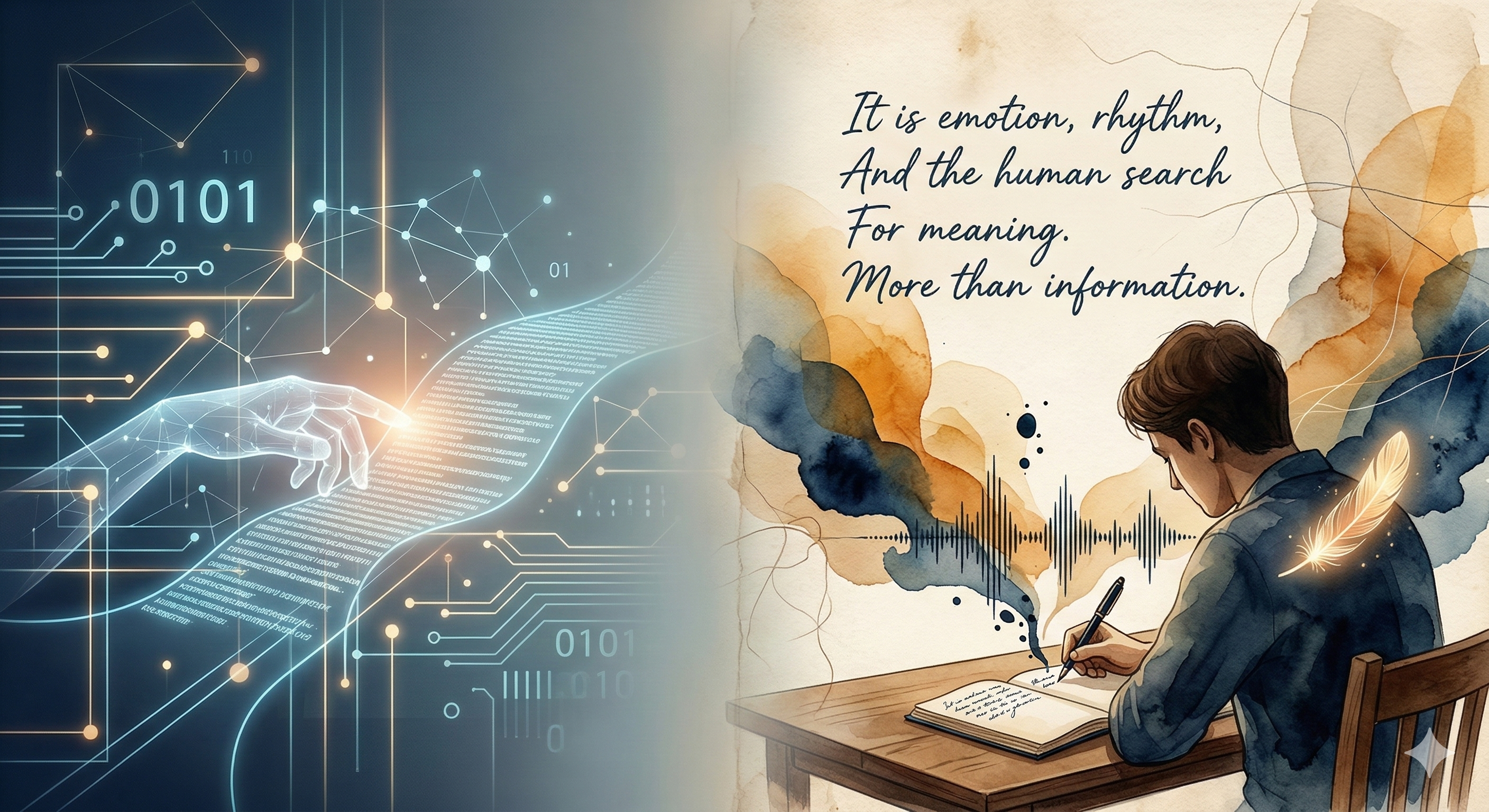
In an era where machines can write essays, generate music, and imitate human voices, many people ask an important question: Does poetry still matter?
The answer is not only yes—it may matter more than ever.
Poetry is one of the oldest forms of human expression. Long before printing presses or computers, people gathered around fires and recited verses to remember their history, express love, mourn their losses, and celebrate victories. Poetry was not simply literature; it was memory, culture, and identity.
Today, technology produces language faster than any poet could ever dream. Yet speed is not meaning. Poetry remains a place where language slows down. A poem forces us to pause, listen carefully, and feel deeply.
Artificial intelligence can imitate structure and style, but poetry is ultimately about human perception—the way a person experiences the world. A sunset described by a poet is not just an image. It carries memory, longing, nostalgia, and hope.
Another reason poetry remains essential is that it trains the mind to recognize beauty and nuance. In a world filled with fast information and endless scrolling, poetry invites us to reflect rather than react.
For young writers, poetry is also a powerful intellectual exercise. Writing verse requires attention to rhythm, metaphor, and structure. It encourages discipline and creativity at the same time.
At Alumniyat, we believe poetry continues to be one of the strongest bridges between cultures. A poem written in Damascus, Cairo, Berlin, or Los Angeles can speak to readers everywhere.
Technology may change the tools we use, but the human need to express emotion and meaning through language will never disappear.
And that is why poetry still matters.