I buy it even when I don’t want it
just feels wrong not to
like I’d be skipping
something I’m supposed to feel
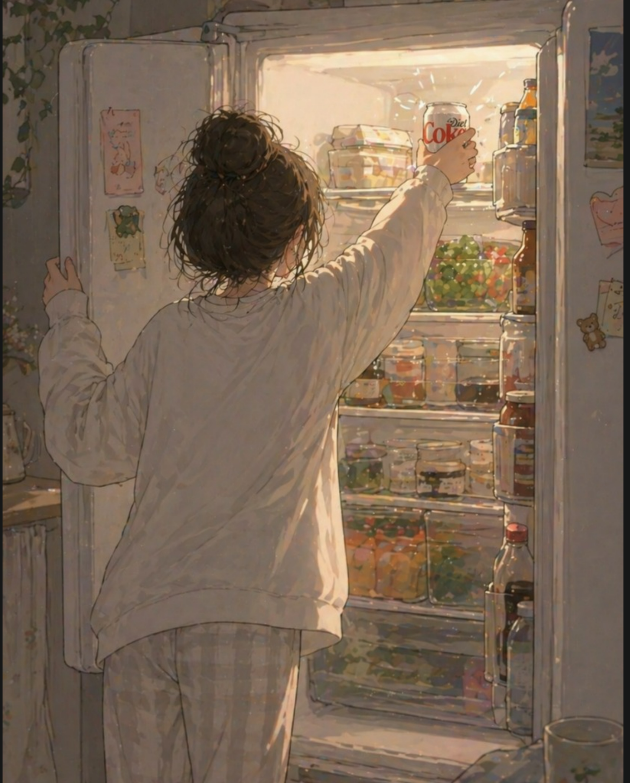
the fridge light hits the can
and for a second
it looks better than it is
it always does
I open it too fast
it spills a little
I don’t even react
I don’t react to a lot of things anymore
first sip’s always weird
like my brain expects something sweet
and gets this instead
still drink it
because at least it’s something
something to focus on
instead of checking my phone again
instead of thinking too much
instead of noticing
how quiet everything feels
halfway through
it already tastes flat
like it gave up
before I could
I keep going anyway
I don’t know why
I don’t even like it that much
but stopping halfway
feels worse
like admitting
I didn’t actually want this
like admitting
I don’t really know
what I do want
so I finish it
every time
even when it’s warm
even when it’s gone dull
I just sit there
with an empty can
and that same feeling
of reaching for something and still
not finding it.............
Diet coke
How did this poem make you feel?
Community Score
1 vote
Log in to vote on this poem.
Poem Analysis
This analysis is provided as optional literary feedback. Community voting remains the primary ranking method.
This poem captures the mundane yet poignant experience of consuming something unwanted, using it as a metaphor for deeper existential dissatisfaction. Its strength lies in its ability to evoke a sense of emptiness and routine through simple yet effective imagery and language.
Strengths
- The poem effectively uses everyday imagery, such as 'the fridge light hits the can,' to create a relatable scene (line 5).
- The repetition of actions and feelings, like 'I don't even react' and 'I don't really know what I do want,' underscores the speaker's emotional numbness and uncertainty (lines 10, 28-29).
- The poem's conversational tone and straightforward diction make it accessible and relatable, enhancing its emotional impact.
Areas for Improvement
- The poem's reliance on a single metaphor—the act of drinking something unwanted—can feel repetitive and might limit the depth of exploration (lines 1-4, 16-18).
- There is a lack of variation in emotional tone, which could make the poem feel monotonous over its length (lines 19-21).
Imagery
The poem uses visual and sensory imagery, such as 'the fridge light hits the can' and 'it spills a little,' to ground the reader in the physical act of drinking. This imagery serves as a metaphor for the speaker's internal state, with the 'flat' taste symbolizing emotional emptiness. The poem's imagery is effective in conveying a sense of routine and dissatisfaction.
Structure
The poem is written in free verse, with no consistent meter or rhyme scheme, which mirrors the speaker's sense of disarray and lack of direction. The use of enjambment, particularly in lines like 'like admitting / I didn’t actually want this,' creates a sense of continuation and inevitability, reflecting the speaker's ongoing struggle with their emotions.
Language & Craft
The poem employs straightforward diction and a conversational tone, which enhances its relatability. The use of repetition, such as 'even when' and 'like admitting,' emphasizes the speaker's internal conflict and resignation. The language is simple yet effective in conveying the poem's themes of dissatisfaction and routine.
Emotional Impact
The poem's emotional impact lies in its ability to evoke a sense of emptiness and routine. The speaker's resignation and lack of reaction to their own dissatisfaction create a poignant reflection on the human condition. However, the emotional tone remains consistent throughout, which might limit its overall depth.
Generated by Openai (gpt-4o) on Apr 29, 2026 20:10
Comments
Log in to leave a comment.
No comments yet. Be the first to share your thoughts!