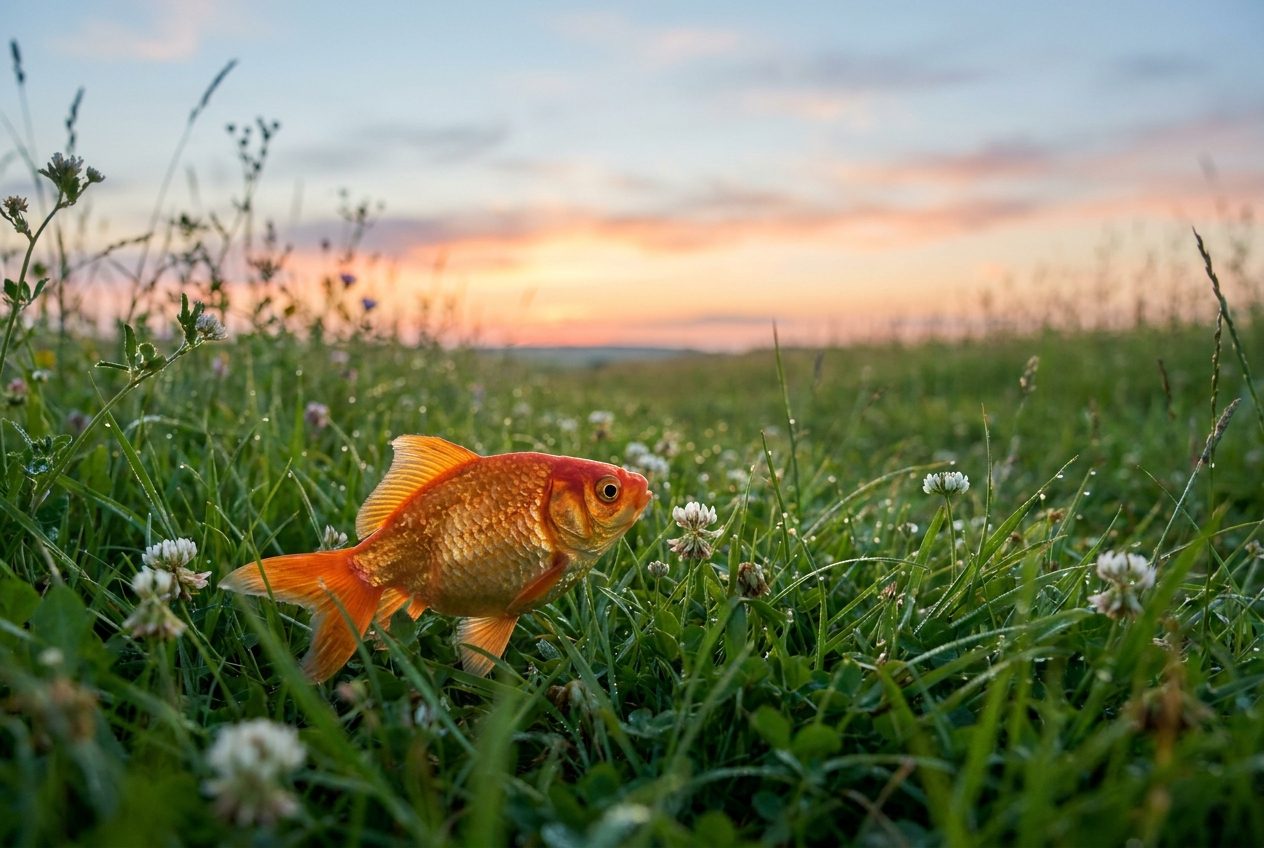
Fish in a Meadow

Nature Poetry / Ecopoetry Human Written by Mirabel Amaechi ·
Image for Fish in a Meadow

A fish only belongs in the ocean
Yet here it lies, wet and flopping on the grass
How did it end up here, a stranger to the world;
had it been an accident, I’m not sure,
for that sparkling blue was miles away from where we stood

A fish in a meadow, that’s for certain
how odd, peculiar, and so out of place
but when I try to pick it up
it wiggles and thrashes around, sparing no ease

I was dumbfounded, ought to think it was lifeless
but instead it sits there, lying in the grass
I ask, expecting nothing but silence
but it speaks to me, oh how it prefered the sun
the sun that humans loved, but fish could not stand

I blinked, once, twice, crouching before the sea creature
why had it run away, and how did it make it this far?
was it tired of staying in one spot, forced to follow the crowd?
maybe that’s why, for with just a sliver of hope
was it looking for an opportunity to fall in elsewhere

And I noticed we were both alone, but both content
savoring our peace and walking around free
away from this wicked world and its society
I didn’t know if we shared the same mind or conciseness
but i felt it; I knew i saw a piece of my soul

But it was funny, how this mere goldfish carried my will
Within such a tiny body.

About This Poem

I've never found myself equal to a society--exactly like a fish in a meadow, I didn't feel like I belonged where I should've. I write poetry not only as a hobby, but to utilize it as an artistic, creative, and philosophical form of expression.

How did this poem make you feel?

Share:

Community Score

—
out of 10

0 votes

Log in to vote on this poem.

Optional AI-generated literary feedback.

Poem Analysis

This analysis is provided as optional literary feedback. Community voting remains the primary ranking method.

Analysis Available

The poem presents a surreal encounter between the speaker and a fish, exploring themes of belonging and self-discovery. Its merit lies in the intriguing metaphor of the fish as a reflection of the speaker's own feelings of displacement and autonomy. The artistic value is found in its ability to convey complex emotions through a simple, yet imaginative narrative.

Strengths

  • The poem uses a compelling metaphor of a fish out of water to explore themes of belonging and self-identity ("A fish only belongs in the ocean / Yet here it lies, wet and flopping on the grass").
  • The interaction between the speaker and the fish is imaginative and thought-provoking, particularly when the fish expresses its preference for the sun ("but it speaks to me, oh how it preferred the sun").
  • The poem effectively conveys a sense of shared understanding and introspection between the speaker and the fish ("And I noticed we were both alone, but both content").

Areas for Improvement

  • The poem's narrative can be somewhat disjointed, with abrupt shifts in focus that may confuse the reader ("I ask, expecting nothing but silence / but it speaks to me").
  • Some lines lack clarity or depth, which can detract from the overall impact of the poem ("but i felt it; I knew i saw a piece of my soul").

Imagery

The poem employs vivid imagery to depict the fish's incongruous presence in a meadow, creating a striking visual contrast ("A fish in a meadow, that’s for certain / how odd, peculiar, and so out of place"). The metaphor of the fish serves as a powerful symbol for displacement and the search for belonging. The imagery of the fish preferring the sun adds a layer of complexity, suggesting a yearning for something beyond its natural environment.

Structure

The poem is structured in free verse, with no consistent rhyme scheme or meter, which mirrors the theme of breaking free from constraints. Line breaks and stanza organization contribute to the poem's pacing, allowing moments of reflection and dialogue to stand out. The lack of traditional structure reinforces the idea of the fish's and speaker's departure from societal norms.

Language & Craft

The poem's diction is straightforward yet evocative, using simple language to convey deeper meanings. The tone shifts from curiosity to introspection, creating a contemplative voice. The use of alliteration in phrases like "wet and flopping" enhances the sensory experience, while the conversational language in the fish's speech adds an element of surprise and whimsy.

Emotional Impact

The poem evokes a sense of empathy and introspection, inviting readers to reflect on their own feelings of belonging and individuality. The surreal encounter with the fish serves as a catalyst for the speaker's self-discovery, creating an emotional resonance that lingers beyond the poem's conclusion.

Generated by Openai (gpt-4o) on Sep 23, 2026 17:21

Comments

Log in to leave a comment.

No comments yet. Be the first to share your thoughts!

More from Mirabel Amaechi

Morphing Sep 23, 2026
Reject Sep 23, 2026
View all poems by Mirabel Amaechi

Related Poems in Nature Poetry / Ecopoetry

Falling Leaves, Fading Dreams by Thomas Arena · Sep 28, 2026
Sky by Charlotte Harris · Sep 09, 2026
Woodland Feast by Charlotte Harris · Sep 09, 2026
Thawing by Sophie Harris · Aug 11, 2026